You just had a professional dental cleaning (scaling), and now your teeth hurt when you sip filter coffee or eat ice cream. Don't panic — this is completely normal and usually temporary. Here's why it happens and how to manage it.
Why Does Sensitivity Occur After Scaling?
During scaling, your dentist removes hardened plaque (tartar) that's built up on your teeth, often extending below the gumline. This process exposes tooth surfaces that were previously covered by:
- Tartar buildup: Acts as an insulating layer (though unhealthy)
- Swollen gums: Inflamed gums may have covered more of the tooth
Once removed, the newly exposed dentin (the layer beneath enamel) is sensitive to temperature changes, sweet foods, and touch. Your tooth roots, which don't have protective enamel, may also be exposed if you had gum recession.
According to research from Indian dental institutions, sensitivity typically lasts 5-7 days after routine cleaning and up to 1-2 weeks after deep cleaning (scaling and root planing).
Immediate Relief Strategies (First 24-48 Hours)
1. Take Prescribed Medications
Your dentist likely prescribed:
- Analgesics (pain relievers): Paracetamol or ibuprofen — take as directed
- Antibiotics: If you had deep cleaning or gum infection, complete the full course
- Medicated mouthwash: Use chlorhexidine mouthwash twice daily to prevent infection and reduce inflammation
2. Use Warm Salt Water Rinses
Rinse with warm salt water (1 teaspoon salt in a glass of lukewarm water) 2-3 times daily. This reduces inflammation, promotes healing, and provides soothing relief. Don't use hot water — lukewarm is best.
3. Avoid Temperature Extremes
For the first 3-5 days, avoid:
- Very hot beverages (piping hot filter coffee, tea)
- Ice-cold drinks or ice cream
- Very sweet or very sour foods (tamarind rasam, lemon rice)
Stick to lukewarm or room-temperature foods and drinks.
Ongoing Care (Week 1-2)
4. Switch to Desensitizing Toothpaste
Use a desensitizing toothpaste containing potassium nitrate (brands like Sensodyne, Colgate Sensitive Pro-Relief). These toothpastes block nerve signals and reduce sensitivity. Apply a small amount directly to sensitive areas and leave it on overnight for faster relief. Use for 2-3 weeks as prescribed.
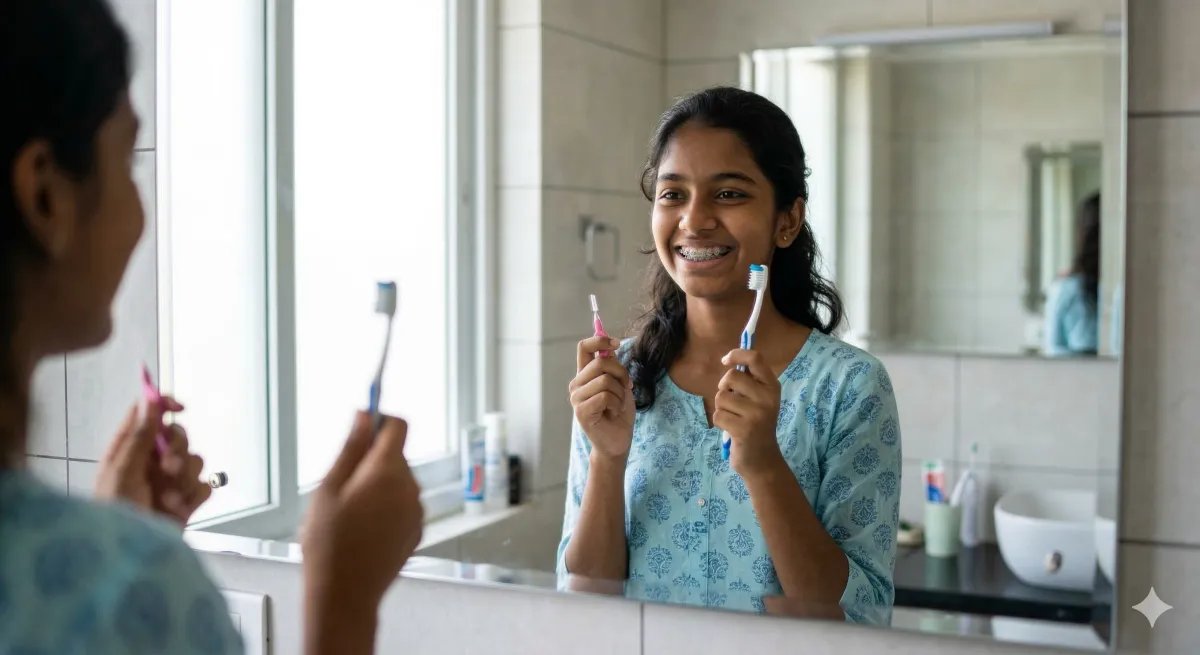
5. Brush Gently with a Soft-Bristled Brush
Wait at least 24 hours before resuming brushing. When you do brush:
- Use a soft-bristled toothbrush (not medium or hard)
- Brush gently in circular motions — no aggressive scrubbing
- Focus on proper technique rather than pressure
6. Delay Flossing for 24 Hours
Wait at least a day before flossing, especially after deep cleaning. Your gums need time to heal. When you resume flossing, be gentle and avoid snapping the floss into swollen gums.
7. Eat Soft, Nutritious Foods
For the first few days, choose:
- Soft idlis, dosas (not crispy)
- Well-cooked rice, sambar, dal
- Curd rice (room temperature)
- Mashed bananas, steamed vegetables
- Khichdi, upma, soft chapatis
When to Call Your Dentist
Mild sensitivity for 1-2 weeks is normal. Contact your dentist if:
- Severe pain persists beyond 7 days
- Sensitivity worsens instead of improving
- You develop swelling, fever, or pus
- Gums bleed heavily or don't stop bleeding
- You have concerns about healing
Long-Term Prevention
To avoid heavy tartar buildup (and minimize post-cleaning sensitivity), maintain excellent oral hygiene:
- Brush twice daily with fluoride toothpaste
- Floss once daily
- Get professional cleanings every 6 months (before tartar accumulates significantly)
Patients who get regular cleanings experience minimal sensitivity because there's less buildup to remove.
Dr. Mani Sundar's Post-Cleaning Advice: "After scaling, I tell patients to baby their teeth for 3-5 days — lukewarm foods, soft diet, salt water rinses, and desensitizing toothpaste. By day 7, sensitivity usually disappears. If you come for cleanings every 6 months, you'll have minimal sensitivity because we're removing less buildup each time. Prevention is always gentler than treatment."