You've invested ₹8,000-₹15,000 in a dental crown (cap) to save and protect a damaged tooth. Now the question is: how do you make it last? With proper care, crowns can serve you for 15-20 years or even longer.
Understanding Your Dental Crown
A dental crown is a tooth-shaped cap that covers your entire visible tooth. In Chennai, the most common types are:
- Porcelain-fused-to-metal (PFM): Strong, affordable, lasts 10-15 years
- All-ceramic/porcelain: Most natural-looking, lasts 10-15 years
- Zirconia: Strongest, most durable, lasts 15-20+ years
While the crown itself doesn't decay, the natural tooth underneath and the gum tissue around it need protection. Failure to care for your crown leads to gum disease, root decay, or crown failure.
Daily Care: The Non-Negotiables
1. Brush Twice Daily with Fluoride Toothpaste
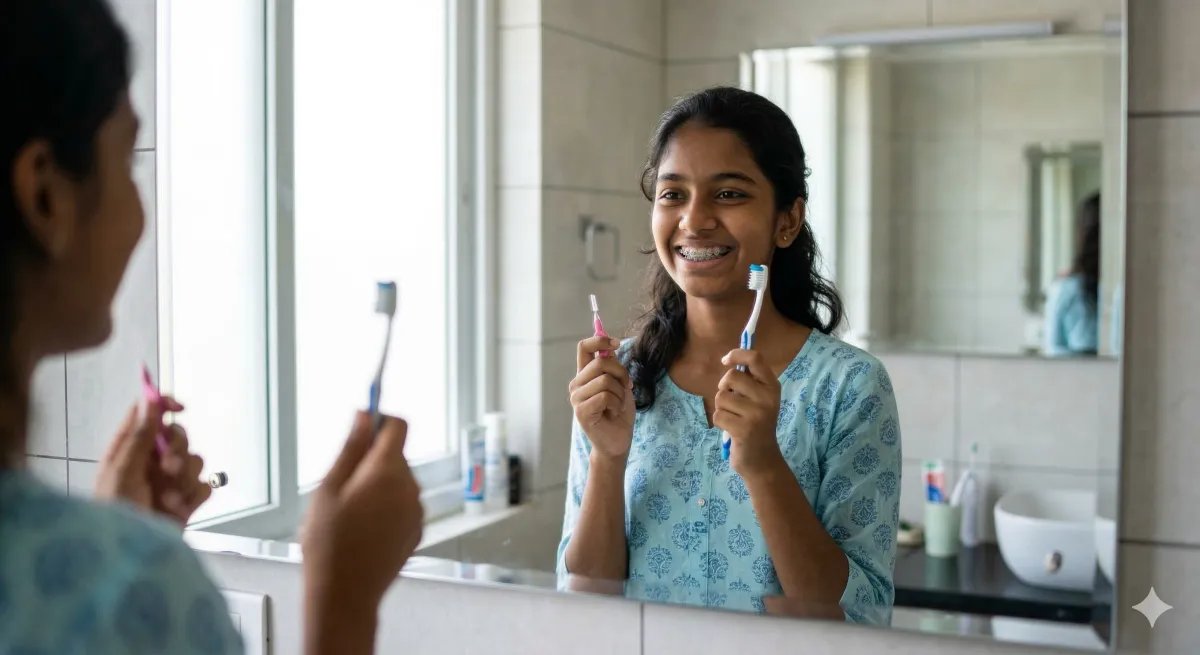
Use a soft-bristled toothbrush and fluoride toothpaste. Pay special attention to the gumline where the crown meets your natural tooth — this is where plaque accumulates and causes problems. Brush gently in circular motions for 2 minutes.
2. Floss Once Daily
Many patients skip flossing around crowns, thinking it might dislodge them. This is a myth. Flossing removes plaque between teeth and below the gumline — areas your toothbrush can't reach. Slide floss gently between teeth, curve it around the crown, and slide it out sideways (don't snap it upward).
3. Rinse After Meals
In Chennai's climate, you likely eat 4-5 times daily (breakfast, mid-morning tiffin, lunch, evening snack, dinner). Rinse with plain water after each meal to remove food particles.
Foods to Avoid (Your Crown's Enemies)
- Ice cubes: Never chew ice — it can crack crowns and natural teeth
- Hard nuts and candies: Almonds, cashews, and hard peanut chikki can fracture crowns
- Sticky foods: Caramel, soft toffees, and chewing gum can pull crowns off (especially temporary crowns)
- Very hard foods: Biting directly into sugarcane, hard vadams, or biting threads with your teeth
What You CAN Eat Normally
Once your permanent crown is cemented (24 hours after placement), you can eat:
- Idli, dosa, rice, chapati
- Cooked vegetables and dal
- Soft fruits like bananas, mangoes, papayas
- Chicken, fish, eggs (cut into small pieces)
- Curd rice, sambar, rasam
Just avoid excessive force on the crowned tooth initially.
Protect Your Crown If You Grind Your Teeth
Do you wake up with jaw pain or headaches? You might have bruxism (teeth grinding) — common in Chennai due to work stress and traffic-related anxiety. Grinding can crack or loosen crowns.
Solution: Ask your dentist for a custom night guard. This protective device costs ₹3,000-₹5,000 but can save your ₹12,000 crown from damage.
Regular Dental Visits Are Essential
Visit your dentist every 6 months for:
- Professional cleaning: Removes hardened plaque (tartar) around the crown
- Crown inspection: Checks for chips, cracks, or loose fitting
- Gum health evaluation: Ensures gums around the crown are healthy
Early detection of problems saves money and prevents crown replacement.
Warning Signs Your Crown Needs Attention
Contact your dentist immediately if you notice:
- Crown feels loose or wobbly
- Sensitivity to hot or cold foods (may indicate cement failure or decay)
- Pain when biting down
- Visible gap between crown and gum
- Dark line appearing at the gumline (especially with PFM crowns)
- Swelling or bleeding around the crown
Dr. Mani Sundar's Crown Care Checklist: "I've seen crowns last 20+ years in patients who brush properly, floss daily, and visit every 6 months. I've also seen crowns fail in 3 years due to poor hygiene and neglect. Your crown is an investment — treat it like one. Brush, floss, avoid hard foods, and see me twice yearly. That's the formula for longevity."