In India, the most common answer to "When should my child first see a dentist?" is "When they have a toothache." This reactive approach means problems are caught late, when they're harder and more expensive to fix.
The Correct Age: By 1 Year (or When the First Tooth Appears)
The Indian Academy of Paediatric Dentistry recommends a child's first dental visit within 6 months of the first tooth erupting, or by their first birthday — whichever comes first.
This sounds early, but early visits serve a critical purpose: prevention and parent education.
What Happens at the First Visit?
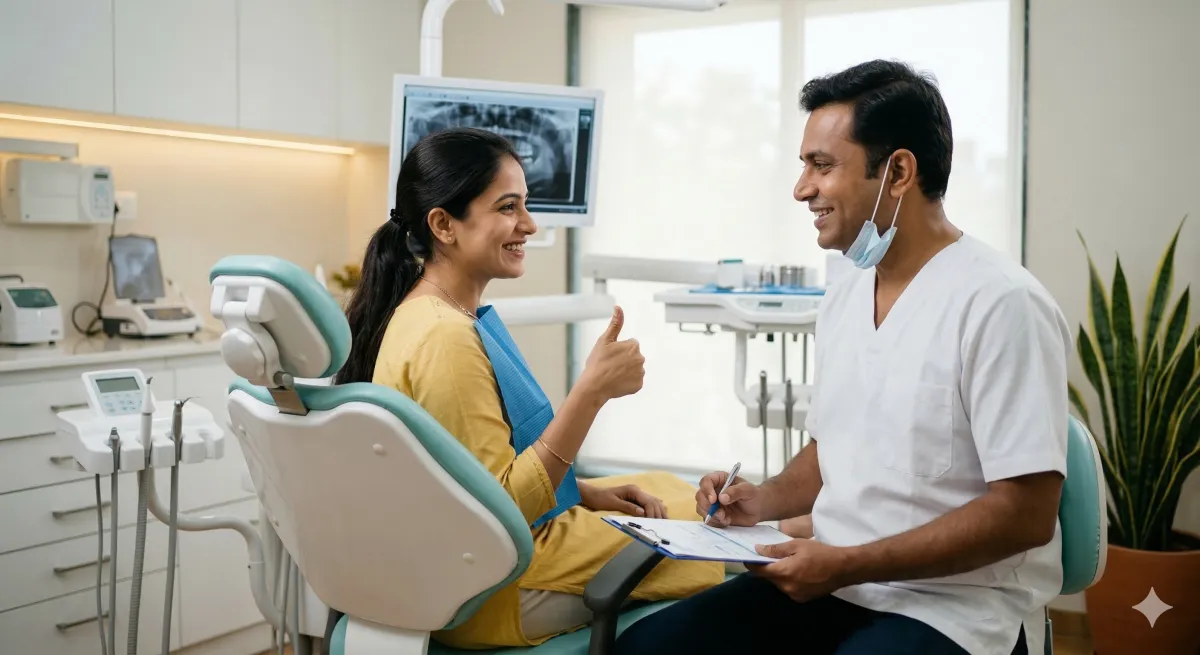
It's not a scary drill-and-fill appointment. The first visit typically involves:
- A gentle visual examination of the baby teeth and gums
- Checking for early signs of cavities (yes, babies can get cavities)
- Guidance on feeding habits — bottle feeding at night is the #1 cause of early childhood cavities
- Cleaning technique demonstration for parents
- Fluoride advice appropriate for the child's age
Common Mistakes Indian Parents Make
- "Baby teeth will fall out anyway": Baby teeth hold space for permanent teeth. Losing them early causes crowding and alignment problems later.
- Bottle at bedtime: Milk pooling around teeth at night causes rapid decay. Switch to water after the last feed.
- Too much sugar: Biscuits, chocolates, and fruit juices between meals are cavity fuel. It's not about eliminating sugar — it's about limiting frequency.
- Not brushing until age 3-4: Start cleaning gums with a soft cloth from birth. Introduce a tiny smear of fluoride toothpaste with the first tooth.
How to Make Dental Visits Positive
- Never use the dentist as a threat ("Be good or the dentist will pull your teeth!")
- Use positive language: "The dentist will count your teeth"
- Let the child sit on your lap during the examination
- Choose a clinic that's child-friendly and patient with kids
- Make it routine — visit every 6 months from age 1
The goal is simple: By the time your child needs actual treatment (fillings, braces), they should already see the dentist as a normal, non-threatening part of life.