It's 10 PM. Your child complains of tooth pain. Clinics are closed. You're unsure if it's an emergency. Instead of panicking or waiting until morning, you video call your Chennai dentist, who examines the tooth remotely and advises you. This is teledentistry — and it's transforming access to oral healthcare in India.
What Is Teledentistry?
Teledentistry uses modern technology to provide remote dental consultations, treatment planning, and even prescriptions. It includes:
- Real-time video consultations: Live video calls between patient and dentist
- Store-and-forward: Patients send images/videos; dentist reviews and responds
- Remote monitoring: Dentist tracks treatment progress via photos and reports
- Tele-education: Virtual oral hygiene instruction and post-procedure guidance
How COVID-19 Accelerated Teledentistry in India
The pandemic forced dentistry to evolve rapidly:
- Lockdowns closed clinics: Patients needed advice but couldn't visit dentists
- Fear of infection: Many avoided in-person visits even when allowed
- Rural areas cut off: Limited access to emergency dental care
Dentists quickly adopted teledentistry platforms to continue care. What began as an emergency measure became a permanent, valuable tool.
What Teledentistry CAN Do
Teledentistry is effective for many services:
1. Initial Consultations and Triage
- Evaluate symptoms and determine urgency
- Decide if in-person visit is needed
- Guide patients to appropriate care (dentist, emergency room, home care)
2. Post-Procedure Follow-Ups
- Check healing after extractions, implants, or surgeries
- Review photos of surgical sites
- Adjust medications or care instructions
- Save patients unnecessary trips to clinic
3. Emergency Assessment
- Evaluate broken teeth, knocked-out teeth, swelling
- Provide immediate first aid guidance
- Prescribe pain medication or antibiotics when appropriate
- Arrange urgent in-person appointments if needed
4. Oral Hygiene Education
- Demonstrate proper brushing and flossing techniques via video
- Review dietary advice
- Discuss cavity prevention strategies
- Especially valuable for parents of young children
5. Second Opinions
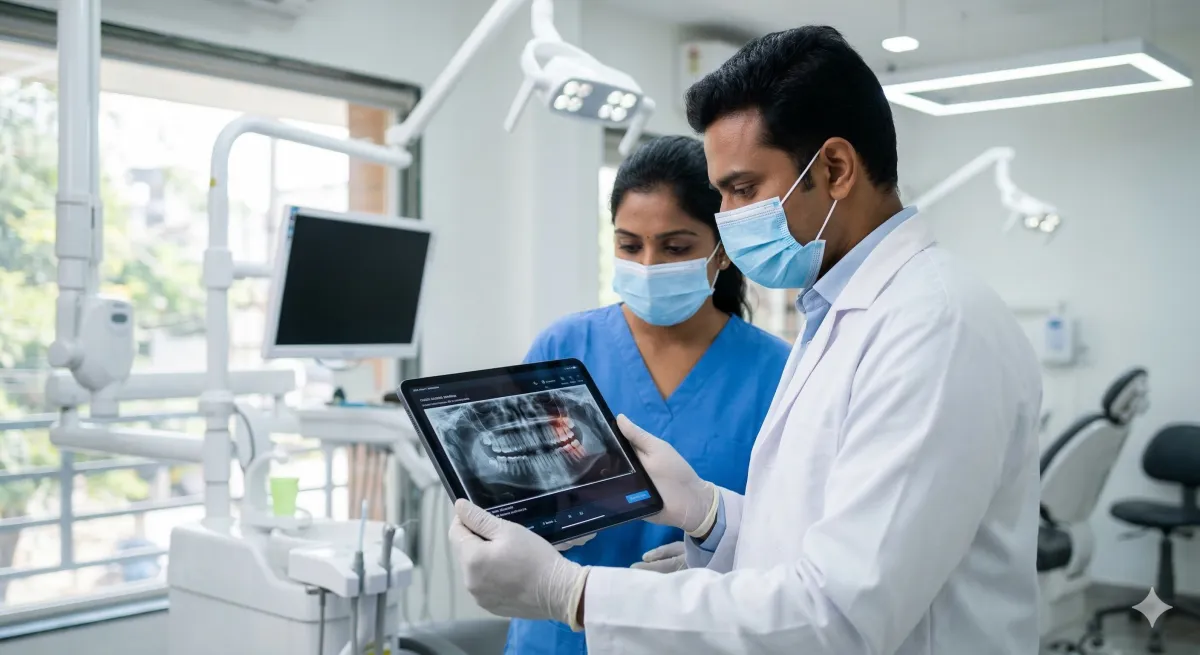
- Review X-rays and treatment plans from other dentists
- Confirm diagnoses
- Discuss treatment alternatives
What Teledentistry CANNOT Replace
While powerful, teledentistry has limitations:
- Cannot perform physical procedures: No cleanings, fillings, extractions, etc.
- Limited diagnostic accuracy: Video doesn't replace clinical examination and X-rays
- Cannot detect hidden problems: Cavities between teeth, gum pockets, bone loss require in-person assessment
- Cannot provide definitive treatment: Can only advise and prescribe; physical treatment still requires office visit
Bottom line: Teledentistry is a valuable complement to in-person care, not a complete replacement.
Teledentistry for Rural and Underserved Indians
Teledentistry's biggest impact is in rural India:
- Limited access to dentists: Many villages have no dental clinics within 50 km
- Costly travel: Visiting a city dentist requires time and money many can't afford
- Lack of awareness: Rural populations often don't know when dental care is urgent
Teledentistry bridges this gap by:
- Connecting rural health workers with dentists via video
- Providing expert guidance for underserved populations
- Reducing unnecessary referrals to distant specialists
- Increasing access to oral care in remote areas
The Indian government and NGOs are piloting teledentistry programs in states like Tamil Nadu, Kerala, and Maharashtra.
How Chennai Residents Use Teledentistry
Common scenarios in urban Chennai:
Scenario 1: Late-Night Emergency
Your tooth cracks at 11 PM. Instead of going to an ER or waiting in pain until morning, you video call your dentist. They assess the damage, prescribe pain medication, and schedule an early morning appointment.
Scenario 2: Post-Implant Check-In
You had a dental implant placed last week. Instead of commuting 90 minutes through Guindy traffic for a 5-minute checkup, you send photos of the surgical site. Your dentist confirms healing is on track.
Scenario 3: Child's First Tooth Pain
Your 6-year-old complains of tooth pain. You're unsure if it's a cavity or just a loose tooth. A quick video consultation clarifies the situation and saves an unnecessary clinic visit.
Scenario 4: Working from Home Consultation
You work from home and want to discuss teeth whitening options. A lunch-break video consultation covers your questions without taking half a day off for an in-person visit.
Teledentistry Platforms in India
Several platforms facilitate remote dental consultations:
- Practo: India's leading healthcare app — includes dentist video consultations
- Apollo 24/7: Apollo Hospitals' telemedicine platform
- Lybrate: Connects patients with dentists for chat and video consultations
- Dental clinic-specific platforms: Many Chennai clinics offer WhatsApp consultations or dedicated apps
Cost of Teledentistry Consultations
- Video consultation: ₹300-₹800 (typically 10-15 minutes)
- Follow-up consultations: Often free or discounted for existing patients
- Emergency consultations: May be offered 24/7 by some clinics for established patients
Compare to in-person visit: ₹500-₹1,000 + travel time and costs.
The Future of Teledentistry in India
Emerging innovations include:
- AI-powered diagnostics: Upload photos; AI detects cavities and gum disease
- Intraoral cameras for home use: Affordable devices that capture clinical-quality images
- Augmented reality guidance: Dentist guides patient through home care using AR overlays
- Wearable oral health monitors: Devices that track brushing habits and alert you to problems
Is Teledentistry Effective?
Research shows:
- Teledentistry has proven effective for consultations, advice, and non-emergency situations
- Patient satisfaction is high — especially for convenience
- Reduces unnecessary emergency room visits for dental issues
- Improves access to care for rural and underserved populations
However, it cannot replace all aspects of in-person care. The ideal model combines both.
Dr. Mani Sundar on Teledentistry: "During COVID lockdowns, I started offering WhatsApp consultations for my patients. It was a lifeline for emergencies and follow-ups. Even now, post-pandemic, I continue offering video consultations for initial assessments and post-treatment check-ins. It saves my patients time and gives them access to advice when they need it most. Teledentistry isn't replacing traditional care — it's enhancing it. The future is hybrid: in-person for procedures, remote for consultations and monitoring."