Traditional dental drills remove both decayed and healthy tooth structure, weakening teeth unnecessarily. But what if technology could target only decay — preserving every millimeter of healthy enamel? That's the promise of minimally invasive dentistry (MID), and it's transforming Chennai dental practices.
What Is Minimally Invasive Dentistry?
MID is a philosophy and set of techniques that emphasize:
- Early detection: Catch cavities when they're tiny and reversible
- Prevention first: Focus on stopping decay before it starts
- Selective tissue removal: Remove only diseased structure, preserve healthy tissue
- Biomimetic restoration: Repair teeth to match natural strength and function
The goal: keep teeth healthy and whole for life, avoiding aggressive treatments when possible.
The Problem with Traditional Drills
Conventional dental handpieces (drills) have limitations:
- Remove more than necessary: Drill burs are sized for efficiency, not precision — they remove healthy tooth structure along with decay
- Generate heat and vibration: Can damage tooth structure and cause sensitivity
- Cause fear and anxiety: The sound and sensation terrify many patients
- Difficult to control in tight spaces: Risk of over-preparation
Minimally Invasive Technologies
1. Air Abrasion — The "Drill-Less" Approach
How it works: A high-velocity stream of tiny aluminum oxide particles (27 micrometers) blasts away decay. The particles are propelled by compressed air, abrading decayed tooth structure without heat, vibration, or noise.
Benefits:
- No heat generated (preserves tooth vitality)
- No vibration or pressure (more comfortable)
- Very quiet (reduces anxiety, especially for children)
- Removes only soft, decayed tissue — leaves healthy enamel and dentin intact
- Reduces need for anesthesia in many cases (less invasive)
- Prevents micro-fractures and chipping that drills can cause
Ideal for: Small to moderate cavities, children, anxious patients, cavity preparation in tight areas
2. Laser Cavity Preparation
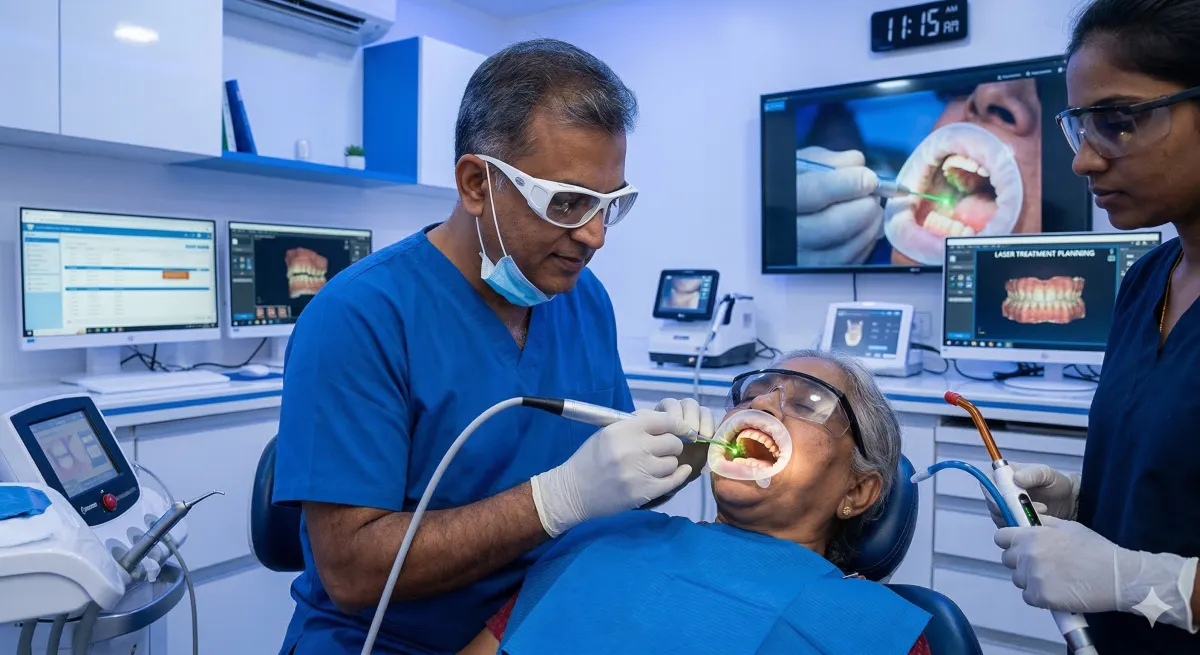
How it works: A focused laser beam vaporizes decayed tooth structure. The laser energy excites water molecules in decay, causing them to explode microscopically and remove diseased tissue.
Benefits:
- Extremely precise — targets only decay
- Sterilizes as it removes tissue (reduces infection risk)
- Minimal discomfort (often no anesthesia needed)
- No mechanical vibration or pressure
- Quiet operation
Ideal for: Superficial to moderate cavities, nervous patients, children, gum disease treatment
3. Micro-Drills and Polymer Burs
How they work: Ultra-small drill heads and special polymer burs designed to remove only soft, decayed tissue. Some "smart burs" (like SmartBur or Cerabur) are engineered to cut only decay — they become dull when they contact healthy, harder dentin.
Benefits:
- Greater precision than conventional drills
- Preserve more healthy tooth structure
- Reduce risk of over-preparation
- Can access tiny areas between teeth
4. Chemomechanical Caries Removal
How it works: Specialized gels (like Carisolv, Papacarie, Brix3000) chemically soften decayed tooth structure. The dentist then gently scoops out the softened decay with hand instruments — no drill needed.
Benefits:
- Completely non-invasive
- No heat, vibration, or noise
- Ideal for children and phobic patients
- Preserves sound dentin
Limitations: Slower than drills; best for small to moderate cavities
Clinical Benefits for Chennai Patients
1. Preservation of Tooth Structure
Every millimeter of natural tooth saved makes the tooth stronger and more resistant to future fractures. Minimally invasive techniques preserve 30-50% more healthy structure compared to traditional drilling.
2. Reduced Sensitivity
Less healthy structure removed = less post-treatment sensitivity. Patients experience significantly less discomfort after minimally invasive procedures.
3. Fewer Root Canals Needed
Preserving more tooth structure means staying farther from the nerve. This reduces the risk of nerve exposure and the need for root canal treatment.
4. Increased Comfort
No vibration, minimal heat, less noise = much more comfortable experience. Many procedures require no anesthesia.
5. Ideal for Children
Chennai parents: air abrasion and lasers are game-changers for pediatric dentistry. Children tolerate them much better than traditional drills, reducing dental anxiety early in life.
Minimally Invasive Philosophy Beyond Cavity Removal
MID extends to other aspects of dentistry:
Adhesive Dentistry:
- Bonding materials to teeth rather than using mechanical retention
- Allows for much smaller cavity preparations
- Creates molecular bonds that seal and strengthen teeth
Preventive Resin Restorations (PRR):
- Sealing deep grooves in molars with tooth-colored resin
- Prevents decay from starting rather than treating it later
Remineralization Therapies:
- Using fluoride, calcium phosphate, and other minerals to reverse early decay
- Arrests cavities before drilling becomes necessary
Minimally Invasive Gum Surgery:
- Laser gum treatments that remove diseased tissue without scalpels
- Faster healing, less pain, no stitches in many cases
Availability and Cost in Chennai
Not all Chennai dental clinics have minimally invasive technologies (they require significant investment). Look for clinics that advertise:
- Laser dentistry
- Air abrasion
- Minimally invasive techniques
- Biomimetic dentistry
Cost Comparison (Chennai, 2026):
- Traditional filling (drill): ₹1,500-₹3,000
- Air abrasion filling: ₹2,000-₹4,000
- Laser cavity prep + filling: ₹2,500-₹5,000
The slight cost increase (₹500-₹2,000) is offset by greater comfort, better preservation, and longer-lasting results.
The Future: Even More Conservative
Emerging MID innovations include:
- Biomolecular cavity treatment: Using enzymes to digest decay without removing tooth structure
- Plasma technology: Cold plasma beams sterilize and remove decay at the molecular level
- Nanotechnology-based remineralization: Nanoparticles that repair enamel and reverse early cavities completely
Who Benefits Most?
- Children: Less trauma, reduced dental anxiety
- Anxious adults: Quieter, more comfortable procedures
- Patients with small cavities: Maximum preservation
- Anyone who values their natural teeth: Keeping more of your tooth intact is always better long-term
Dr. Mani Sundar's Minimally Invasive Approach: "I trained in biomimetic and minimally invasive techniques specifically to preserve more natural tooth structure. Why remove healthy enamel unnecessarily? With air abrasion and adhesive techniques, I can treat small cavities without numbing and with minimal discomfort. Patients — especially kids — tolerate it far better. And preserving more tooth structure means stronger, longer-lasting teeth. It's simply better dentistry. Ask me about minimally invasive options when you visit."