What if dental restorations could perfectly replicate the strength, flexibility, and appearance of your natural teeth? That's the promise of biomimetic dentistry — a revolutionary approach that mimics nature's design rather than replacing it with artificial materials.
What Is Biomimetic Dentistry?
"Biomimetic" simply means "mimicking nature." Biomimetic dentistry applies this concept to dental treatment by:
- Using materials that replicate the natural structure and properties of teeth
- Preserving maximum healthy tooth structure during treatment
- Restoring teeth to their original strength and biomechanics
- Creating restorations that flex and function like natural teeth
Traditional dentistry often removes excessive tooth structure and uses rigid materials (like metal). Biomimetic dentistry takes the opposite approach: minimal removal, flexible materials, and natural function.
The Science: How Natural Teeth Work
Your natural teeth are engineering marvels:
- Enamel (outer layer): Hardest substance in your body, but slightly flexible
- Dentin (inner layer): Softer, more elastic, absorbs shock
- Together they flex: Natural teeth flex slightly under chewing force, distributing stress and preventing cracks
Traditional fillings (amalgam, old composites) are rigid. When you bite down, the filling doesn't flex — creating stress points that eventually crack the tooth. Biomimetic restorations flex with your tooth, preventing fractures.
Biomimetic Materials: The Game-Changers
1. Fiber-Reinforced Composites (FRC)
Research shows that bilayered resin composite structures with glass fiber bases mimic the natural dentin-enamel complex. These materials:
- Provide up to 400% stronger bond strength than conventional fillings
- Flex like natural dentin
- Distribute chewing forces evenly
- Reduce the need for crowns
2. Advanced Adhesive Techniques
Modern bonding agents create molecular bonds between tooth and restoration — literally fusing them together. This:
- Seals out bacteria (preventing secondary decay)
- Reinforces weakened tooth structure
- Eliminates gaps where traditional fillings leak
3. Tooth-Colored Ceramics
Modern ceramics (like lithium disilicate) mimic enamel's optical properties:
- Light passes through them naturally (unlike metal)
- Match surrounding teeth perfectly
- Strong enough for molars, beautiful enough for front teeth
Biomimetic Techniques: Preserving Tooth Structure
Traditional crown preparation removes 60-75% of tooth structure. Biomimetic techniques preserve much more:
- Onlays instead of crowns: Cover only damaged portions, leaving healthy structure intact
- Adhesive buildups: Rebuild teeth with bonded materials rather than cutting them down
- Minimal-prep veneers: Transform smiles with ultra-thin porcelain, removing almost no enamel
- Layered composite buildups: Mimic natural tooth layers for strength and aesthetics
Benefits for Chennai Patients
- Reduced sensitivity: Biomimetic restorations cause significantly less post-treatment sensitivity
- Fewer root canals: By preserving tooth structure and sealing effectively, the need for root canals drops
- Longer-lasting restorations: Studies show biomimetic fillings last 2-3x longer than traditional fillings
- Natural appearance: Impossible to distinguish from real teeth
- Prevent tooth fractures: Flexibility reduces cracking
Real-World Applications in Chennai
Biomimetic dentistry is available in advanced Chennai dental practices:
- Replacing old silver fillings with bonded composites
- Restoring cracked teeth without crowns
- Building up worn teeth from grinding
- Creating natural-looking veneers for smile makeovers
The Cost Factor
Biomimetic procedures cost slightly more upfront than traditional methods:
- Biomimetic filling: ₹3,000-₹6,000 (vs traditional: ₹1,500-₹3,000)
- Biomimetic onlay: ₹8,000-₹15,000 (vs crown: ₹8,000-₹15,000)
But the long-term value is superior: fewer replacements, fewer complications, better outcomes.
The Future: Even More Like Nature
Researchers are developing:
- Self-healing dental materials: Composites that repair micro-cracks automatically
- Bioactive materials: Fillings that release minerals to strengthen surrounding tooth structure
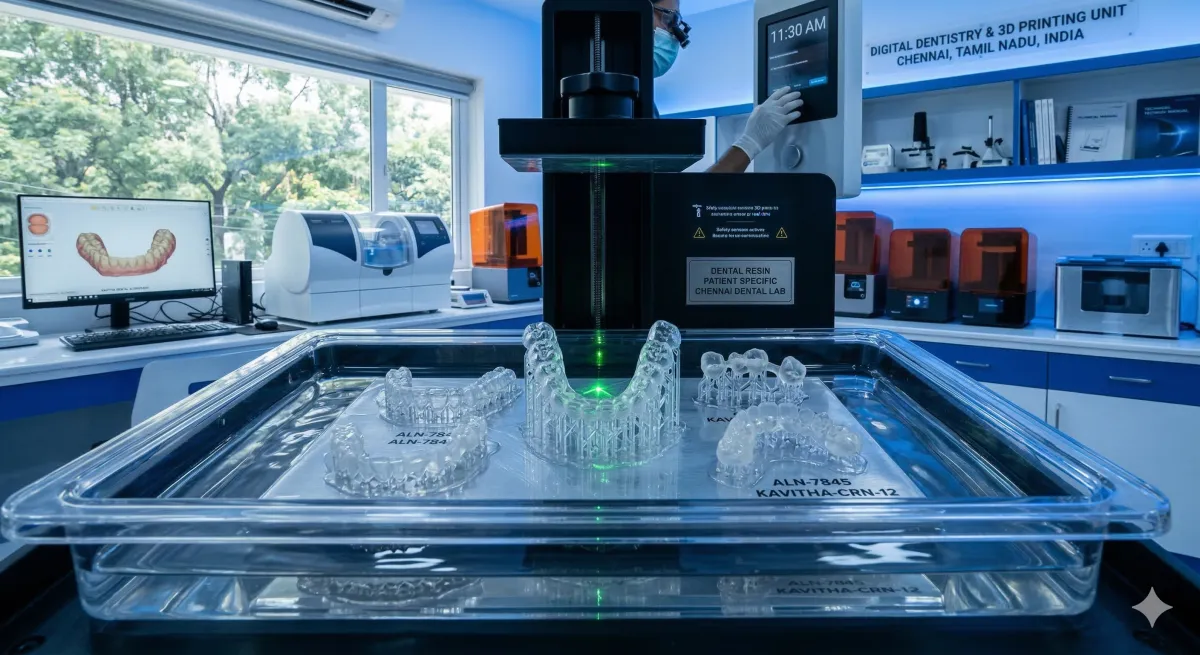
- 3D-printed tooth structures: Custom restorations that perfectly replicate natural anatomy
Dr. Mani Sundar's Perspective on Biomimetics: "I've shifted my practice toward biomimetic principles over the past 5 years. Why remove healthy tooth structure unnecessarily? Why use rigid materials that crack teeth? Biomimetic techniques let me preserve more of your natural tooth, create stronger restorations, and deliver results that look and feel completely natural. It's the future of dentistry — and it's available in Chennai right now."