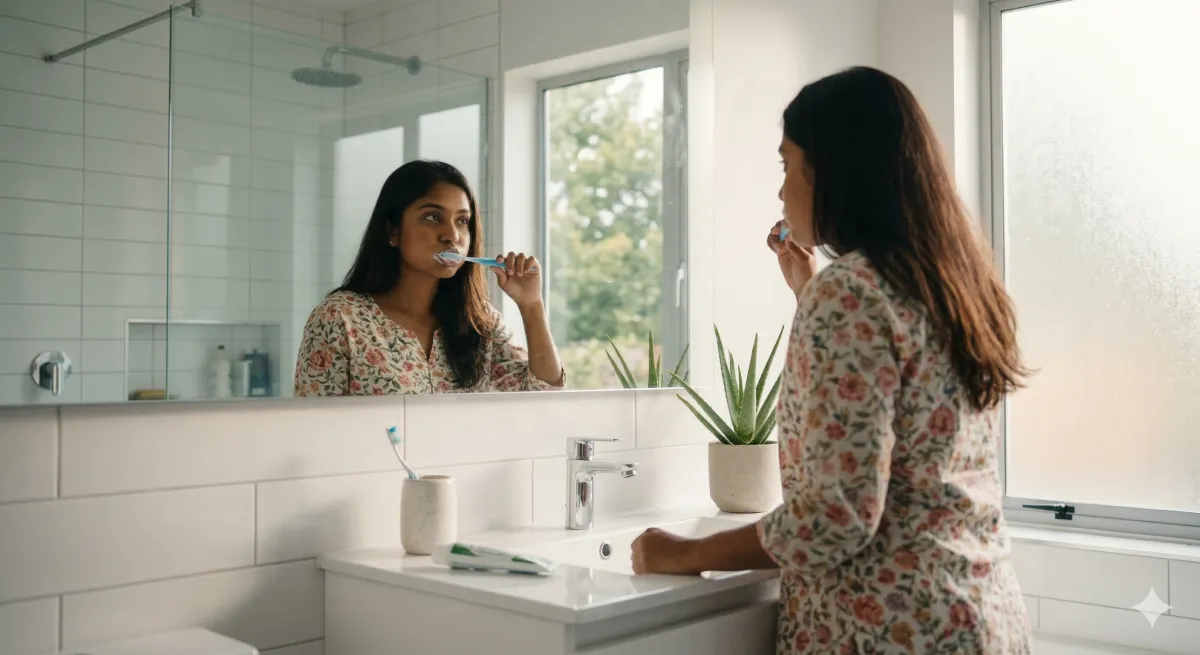
Most Chennai residents brush their teeth in the morning before filter coffee and at night before bed. But if you could only brush once (you shouldn't!), which time would save your teeth? The answer reveals fascinating insights about oral bacteria and circadian rhythms.
What Happens to Your Teeth Overnight
During sleep, saliva production drops dramatically. Your mouth becomes drier, and the pH becomes more acidic. Plaque bacteria thrive in this environment, multiplying rapidly over 7-8 hours. This is why you wake up with "morning breath" and a fuzzy feeling on your teeth — it's a bacterial party that happened while you slept.
Research shows that this extended overnight period represents the longest uninterrupted time bacteria can work against your teeth. Without saliva to wash away food particles and neutralize acids, cavity formation accelerates.
Morning Brushing: Before or After Breakfast?
Dental studies comparing pre- and post-breakfast brushing found that brushing before breakfast is more effective at reducing cavity-causing bacteria (Streptococcus mutans). Here's why:
- Removes overnight bacterial buildup: Brushing immediately after waking removes the bacteria that multiplied overnight, preventing them from feeding on your breakfast.
- Creates a protective fluoride barrier: Morning brushing coats your teeth with fluoride before acidic coffee, juice, or citrus fruits hit your enamel.
- Increases saliva production: Brushing stimulates saliva flow, which continues to protect your teeth throughout the morning.
If you brush after breakfast, wait 30 minutes — especially after acidic foods like orange juice or coffee. Brushing immediately spreads acid across your enamel and can accelerate erosion.
Night Brushing: The Most Important
If you must choose one brushing session (again, don't!), choose night brushing. Here's why it's considered more critical:
- Prevents bacterial multiplication overnight: Brushing before bed removes food debris and plaque, giving bacteria nothing to feed on during the night.
- Lower saliva during sleep: Since saliva production decreases at night, removing bacteria beforehand is essential. You won't have your mouth's natural defense mechanism working while you sleep.
- Significantly reduces cavity risk: Research shows people who brush before bed have significantly lower rates of cavities and gum disease compared to those who only brush in the morning.
The Chennai Heat Factor
Chennai's summer heat causes dehydration, reducing saliva production even during waking hours. Drink plenty of water throughout the day to maintain saliva flow — aim for 2-3 liters, especially if you're commuting in traffic or working outdoors.
Dr. Mani Sundar's Recommendation: "Both morning and night brushing are essential, but if I had to rank them, night brushing is more critical for cavity prevention. In Chennai's climate, also rinse your mouth with plain water after your afternoon tiffin or evening filter coffee to wash away food particles."